
Understanding the Systems Behind What Gets Built
The most consequential real estate and infrastructure decisions rarely fail because someone forgot to build another spreadsheet. They fail because an assumption about the world turned out to be wrong, or because several individually reasonable assumptions could not coexist once the project encountered reality.
Power may arrive later than expected. Infrastructure may exist while usable capacity does not. Political support can disappear, demand can change, and capital can become more expensive. Sometimes no single assumption destroys the project, but the interaction between several of them does.
My writing focuses on those intersections. The objective is not to predict every outcome or eliminate uncertainty. It is to develop better ways of recognizing the conditions that make an outcome possible in the first place and identifying which assumptions deserve the greatest scrutiny before they become expensive commitments.
AI and Digital Infrastructure
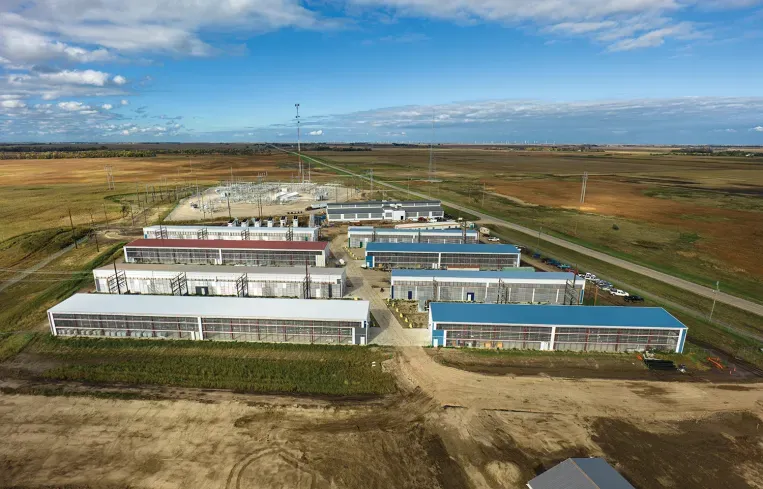
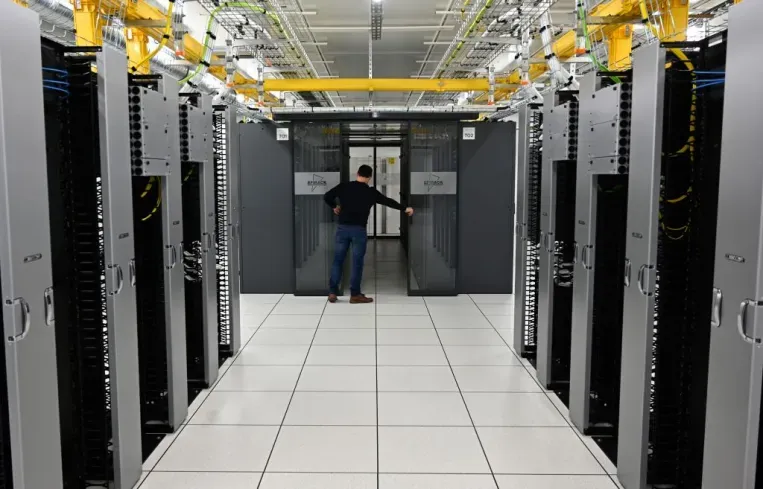
Artificial intelligence is usually discussed as a technology story, but I am more interested in its physical consequences. AI requires an enormous industrial system of data centers, electrical infrastructure, transmission, fiber, cooling, equipment, land, capital, and human expertise. The digital economy may operate at extraordinary speed, but the physical systems supporting it do not.
Much of my current work examines what happens inside that gap. One recurring idea is that a site is not a project. Land may be necessary for a data center, but the relevant question is whether power, approvals, connectivity, infrastructure, capital, stakeholders, and timing can converge around that land in a way that creates an executable opportunity.
Another is that power is not deliverable capacity. Statements about available megawatts can conceal the questions that matter most: when can that power actually serve the project, under what conditions, through which infrastructure, and with what dependencies still unresolved?
I also write about the idea that permission has become infrastructure. Development rights, community acceptance, disclosure, permitting, regulation, and political legitimacy increasingly influence infrastructure development as directly as physical systems do.
Infrastructure, Place and the Local Balance Sheet
National discussions about AI infrastructure often emphasize investment, economic growth, technological competitiveness, and the strategic importance of expanding computing capacity. Communities experience those projects locally, which means they evaluate a different set of costs and benefits.
The local balance sheet asks what happens to electricity rates, water resources, tax revenues, public infrastructure, employment, land use, environmental conditions, and long-term development patterns. Investors and developers have their own balance sheets, but the durability of infrastructure development increasingly depends on understanding both.
I am also interested in how the geography of AI infrastructure changes as the market evolves. The largest hyperscale campuses receive enormous attention, but different workloads, customers, and markets may require different infrastructure strategies. That includes what I describe as the Missing Middle, the space between smaller facilities and the enormous campuses that dominate industry headlines.
Real Estate, Cities and Sustainability
Long before AI infrastructure became a central focus of my work, I was interested in why real estate behaves differently from other assets. Buildings cannot be separated from the infrastructure, regulation, labor markets, transportation systems, public services, institutions, and communities around them.
Cities are the accumulated result of decisions about those systems. Land use, infrastructure investment, capital allocation, regulation, incentives, transportation, and political power interact over decades to produce the places around us. This is why I return repeatedly to a simple idea: Cities are choices.
Sustainability is another part of that systems perspective. Buildings operate inside systems of energy, water, transportation, materials, land, finance, regulation, and human behavior. Sustainability works best when those considerations become part of the operating logic of an asset rather than an additional layer applied afterward.
Capital and Decision-Making
Capital does not eliminate uncertainty. It places a price on it. Good investment decisions therefore require more than identifying upside. They require understanding which assumptions carry the greatest consequences if they are wrong and which dependencies remain outside the control of the investor or developer.
That is why much of my work returns to the moment before commitment. What would have to be true for this opportunity to work? Which conditions have actually been demonstrated? Which remain assumptions? Which can be controlled, and which depend on another institution or stakeholder?
Most importantly, which unresolved condition can destroy the opportunity regardless of how attractive everything else appears? Across real estate, infrastructure, cities, sustainability, and capital, that remains the question at the center of my work.
Explore the Ideas
This section brings together published commentary, essays, research, frameworks, briefing papers, and selected analyses across these subjects. Some pieces examine immediate developments in the market, while others develop concepts intended to remain useful long after a particular market cycle has passed.
The subjects will continue to evolve as technology, infrastructure, capital, policy, and cities evolve. The underlying purpose will remain the same: to understand what actually has to be true before an idea can survive contact with the physical world.
Publications


© 2026 Suhail Y Tayeb. All rights reserved.